
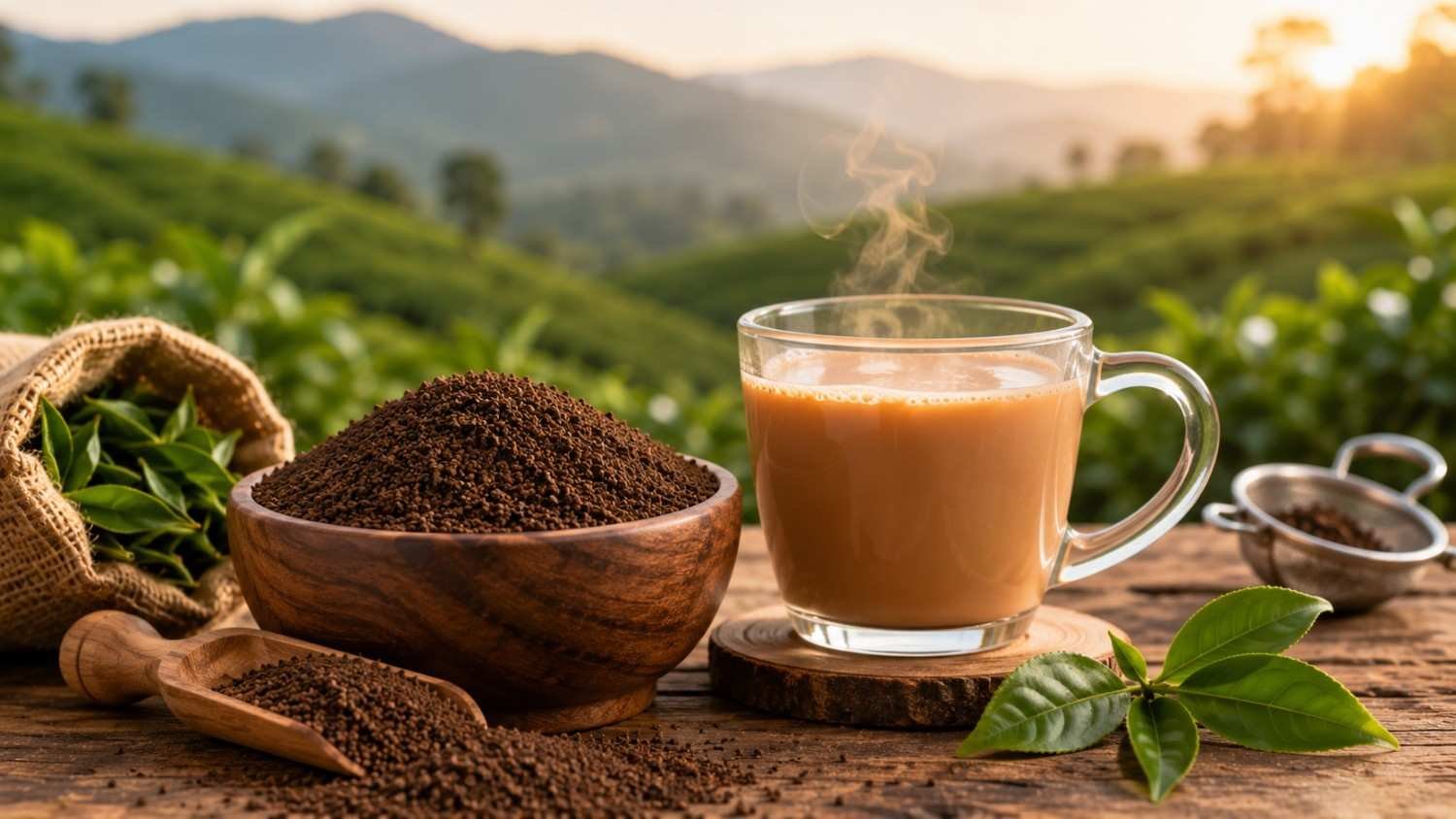

Early morning on a Munnar tea estate smells like wet earth and woodsmoke curling up from a nearby chaya kada. Somewhere between 1,600 and 2,200 metres, pickers move through rows of Camellia sinensis bushes, plucking only the youngest, silver-haired buds by hand. This careful selection is what separates white tea from every other cup in the Indian tea cupboard — it is barely touched by human processing, and that restraint is exactly the point.
A Tradition Rooted in Restraint, Not History Books
White tea is the oldest processing method in Chinese tea history, dating back over a thousand years, but its cultivation in India’s Western Ghats is comparatively recent, expanding through Munnar’s high-altitude estates from the early 2000s onward. Kerala’s cool, misty hill climate turned out to be unexpectedly suited to the slow, careful withering white tea demands.
Unlike black or green tea, white tea skips rolling and firing almost entirely. The leaves are simply plucked, spread out, and left to wither and dry naturally, often under indirect sunlight. This minimal-intervention method preserves the tea in a state closer to the living leaf than any other style available from Munnar estates.
Why a Pale Cup Packs a Serious Wellness Punch
White tea contains higher concentrations of certain catechins than more processed teas, because minimal oxidation preserves compounds that heat and rolling would otherwise break down. Its EGCG and polyphenol content supports antioxidant activity in the body, while its naturally low caffeine makes it gentle enough for an evening cup.
In Ayurvedic thinking, lightly processed teas are considered more sattvic — clean, calming, and easy on digestion. Munnar households and NRI Keralites returning home for Onam often reach for white tea specifically because it doesn’t compete with the richness of a sadya spread, unlike a stronger black tea would.
How Do You Brew White Tea Without Making It Bitter?
White tea turns bitter fast if the water is too hot or the leaves steep too long. The ideal method uses water at 75–80°C, poured gently over the buds, and a steep time of just 2–3 minutes.
The result is a cup the colour of pale gold, almost champagne-like, with a fragrance that’s floral and faintly grassy rather than earthy. There’s no need for milk or sugar — the natural sweetness comes through on its own. Some Munnar tea drinkers steep the same buds twice, since a second infusion often reveals a softer, rounder flavour than the first.
A Discovery in a Kochi Kitchen
Lakshmi Menon, a schoolteacher in Ernakulam, grew up on strong, milky chaya the way most Kerala households drink it every morning. It wasn’t until a colleague from Munnar gifted her a small tin of silver-haired silver tips tea that she tried anything different. “I almost added milk out of habit,” she laughs, “but the moment I smelled it, I knew that would ruin everything.” She now keeps a small pot for herself on quiet evenings, steeped plain, while the rest of her family sticks to their usual strong brew.
Is White Tea Better Than Green Tea?
Not necessarily — the two simply serve different moments. Green tea is pan-fired or steamed to halt oxidation early, giving it a grassier, more assertive flavour and slightly higher caffeine. White tea skips that step entirely, resulting in a lighter, sweeter, more delicate cup with less caffeine overall.
Green tea suits someone who wants a brisk morning lift with familiar tea flavour. White tea suits someone who wants something gentler, closer to a herbal infusion in feel, best sipped slowly rather than gulped. Neither is objectively superior — it depends on what the moment calls for.
What to Look For in Genuine Quality White Tea
Real high-altitude white tea should show visibly silver-haired, intact buds rather than broken fragments, with a soft, downy texture you can see even before brewing. The dry leaf should smell faintly sweet and hay-like, never musty or flat.
Look for estate-sourced, single-origin labelling and a recent packed-on date, since white tea’s delicate compounds fade faster than heavier black teas. Genuine estate tea sourcing, with traceability back to a specific Munnar garden, is one of the clearest signals of quality — mass-blended white teas from unspecified origins tend to taste flat and lack the floral top notes that define the real thing.
Frequently Asked Questions
Q: What is white tea made from?
A: White tea is made only from the youngest buds and unopened leaves of Camellia sinensis, picked before they fully open. It undergoes minimal processing — just withering and drying — with no rolling, rolling-induced oxidation, or firing, which preserves its delicate flavour and higher antioxidant content compared to more processed teas.
Q: Does white tea have caffeine?
A: Yes, but less than black or green tea. White tea typically contains a lower caffeine concentration because it uses young buds and skips oxidation, resulting in a gentler stimulant effect. It’s often chosen for evening drinking by people who find black tea too strong before bed.
Q: Is silver tips tea the same as white tea?
A: Silver tips tea is a specific, premium grade of white tea made exclusively from unopened buds covered in fine silvery hairs. All silver tips tea is white tea, but not all white tea is silver tips grade — some blends include slightly opened leaves alongside the buds.
Q: How should white tea be stored?
A: White tea should be stored in an airtight container, away from light, heat, and moisture, ideally in a cool pantry rather than near a stove. Because it’s minimally processed, its delicate aromatic compounds degrade faster than black tea, so it’s best consumed within six to twelve months of the packed date.
Conclusion
White tea asks for patience in a way most Indian teas don’t — no milk, no sugar, no rush. What you get back is a cup that tastes closer to the hillside it came from than almost anything else in a Munnar estate’s range, pale gold and quietly fragrant.
Whether it’s a first cautious sip after years of strong chaya, or a familiar evening ritual for someone who already knows the difference a good bud makes, white tea rewards a little attention. That, more than anything, is what keeps drinkers coming back to it.