
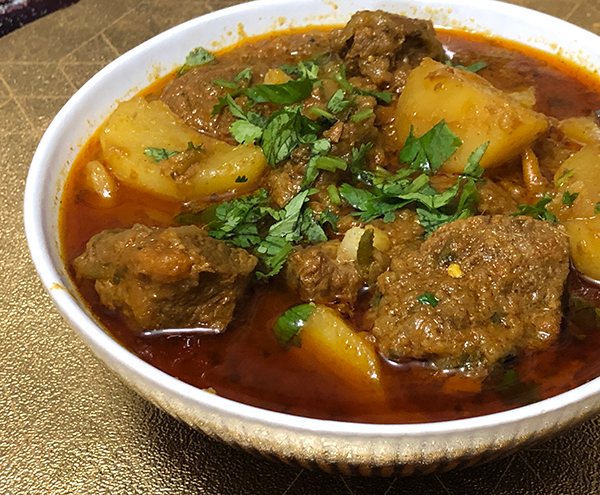

Korma, the most popular dish in India, is a mildly spiced, aromatic curry made from meat in a thick yogurt-based sauce. Everyone enjoys it and is served to family and friends on special occasions.
Classically, korma is a curry made from chicken, mutton, or another choice of meat, braised at a high temperature. Then full-fat yogurt, combined with a mixture of whole garam masala spices, broth and cream, is slowly and carefully mixed into the meat and slowly cooked to perfection. During the cooking process, the yogurt is kept below the curdling temperature of 200°F. The result is a rich, creamy sauce with a velvety texture. However, this method is not followed exactly by everyone, so there are different variations of the korma.
Different variations of korma
The four most popular korma curries in the subcontinent are Mughlai, Shahi, Kashmiri and South Indian. Shahi and Mughlai are similar to the traditional korma recipe, yogurt is mixed with almonds and the meat is braised in yogurt, onions and spices and cooked later.
Another interesting fact about the korma is that it was originally white when it was created by the Mughals in the 16th century. You can try the Shahi White Lamb Khorma and White Chicken Khorma which are Moghlai versions and see how different they are in taste and aroma compared to the South Indian Korma recipe below.
This particular version of lamb korma with potatoes is very popular among the Muslims of South India. Tomatoes, turmeric, red chilies and vegetables are added to the meat. The base for South Indian korma is coconut milk and some even use ground or grated fresh coconut, giving the korma a decidedly rich flavor. In the version below, I didn’t use coconut because I want to keep it light to suit Canadian taste buds.
Another fact that is important to keep in mind when preparing korma is not to overpower the taste of the meat with the overpowering masalas. The special taste lies in the delicate seasoning and the balanced use of spices.
Needless to say, the caramelized onion korma, no matter what region it comes from, vegetarian or meat-based, Mughlai or Shahi, is an absolute sub-continental favorite.
Using fresh ingredients:
It is important to use fresh ingredients like freshly sliced onions, freshly ground ginger garlic paste, fresh tomatoes, fresh mint, green chilies and coriander. Changing this and taking shortcuts like using tomato paste instead of fresh tomatoes would destroy the taste. Then you can’t call it authentic korma.
Back then, to make a decent korma, you even had to use spices from scratch. No wonder the dishes tasted so good back then. I remember my mother preparing the different masalas before cooking. They were freshly ground on the Sil Batta (the millstone) in the form of a paste, either as a spice mix or separately. Red chilies and turmeric were soaked in water before grinding, which further enhanced their flavor. Back then, no one used powdered masalas. Although many years later, when she started using them, she still had her own spices freshly ground at the local mill every two weeks. She believed that the spices would lose their flavor if kept for too long, which I think is completely true.
It is also good to know that if the dry spice mill is used for too long, the spices will burn and all of their aroma will be lost. Therefore, it is better to grind them in a pulsating manner so that the grinder does not get too hot.
The right piece of meat for the korma
It is also very important to choose the right piece of meat for this traditional dish. I choose the lamb shoulder with a few spare ribs (seene ka gosht) and some pieces of leg. Instead of cutting the leg or shoulder into 1-inch rounds like current butchers do, it is important to cut the meat into large or medium pieces and cut the marrow portion into 3-4 inch long pieces. This will keep the bone marrow intact, otherwise it will mix with the curry when cooking, making it heavy and heavy Taste dimension is lost (by which I mean we perceive with our taste buds but taste with our cultural senses).
How well you sautéed your onions is important
Another trick to getting the right taste of traditional korma lies in how well you have fried your onions. They need to be fried on a low to medium flame until lightly golden brown before adding the ginger garlic paste. If they were not fried well, they would swim in the curry and the consistency would change. And over-browning would give the dish a burnt and bitter taste.
Quick Cooking in the Instant Pot:
The korma can be prepared quickly in the Instant Pot or pressure cooker to save time, unlike before when the meat was first seared and then slowly cooked on the stove until done. You can choose to slow or pressure cook the korma in the Instant Pot. You only need 10-15 minutes to fry the onions, sear the meat in sauté mode and then add all the other ingredients before closing the lid and setting the whole thing on for 22-25 minutes.
Here is the prescription:
INGREDIENTS:
1.5 kg lamb shoulder meat
1/4 cup + 1 tbsp oil
8 whole cloves
8 whole green cardamoms
2 x 2 inch whole cinnamon sticks
2 large sliced onions
3 large plum tomatoes
2 tsp coriander powder
1/2 cup yogurt
6-8 green chili peppers
1/2 cup chopped fresh cilantro
1/2 cup fresh mint
2 large potatoes quartered.
Instructions:
1. Slice onions, quarter tomatoes and potatoes, chop coriander.
2. Heat the oil in the Instant Pot and set it to “Regular Sauté.”
3. Immediately add all the spices followed by the sliced onions.
4. Fry in oil until golden brown.
5. Add the ginger garlic paste, turmeric, red chilli and coriander powder.
6. Add the lamb pieces, season with salt and fry in the masala cavity.
7. Now add the quartered tomatoes, yogurt, green chilies, mint and chopped coriander.
8. Mix everything well. Sprinkle water around the sides of the Instant Pot, close the lid, set the pressure valve to the seal position, press the meat button and set to cook for 22-25 minutes.
9. When finished, perform Natural Pressure Release (NPR).
10. When all the steam has escaped, open the lid and gently stir the curry.
11. Add the potato quarters, sprinkle some salt over them and close the lid. Now press the pressure cook button, set the pressure valve to the lock position and set it to cook for 5 minutes.
12. When finished, open the lid after the NPR.
13. Drizzle 1 teaspoon lemon juice over the top and add salt.
14. Saute on normal heat for a while to thicken the curry slightly. Let simmer until the oil rises to the top.
15. Garnish with coriander and serve hot with rice, naan or paranta.
Recipe
Traditional Lamb Korma Aloo Goshth (Lamb Korma with Potatoes)
This is a delicious curry with juicy pieces of meat and a uniquely delicate taste that is very popular in the South Asian subcontinent, especially India.
Ingredients
- 1.5 kg Lamb shoulder meat
- 1/4 cup + 1 tbsp oil
- 8 whole cloves
- 8 whole green cardamoms
- 2 x2 sticks of whole cinnamon
- 2 large sliced onions
- 3 large plum tomatoes
- 2 teaspoon Coriander powder
- 1/2 cup yogurt
- 6-8 green chili peppers
- 1/2 cup chopped fresh coriander
- 1/2 cup fresh mint
- 2 large potatoes quartered.
Instructions
-
Cut onions, quarter tomatoes and potatoes, chop coriander.
-
Heat the oil in the Instant Pot and set it to regular sauté.
-
Immediately add all the spices followed by the sliced onions.
-
Fry in oil until golden brown.
-
Add the ginger garlic paste, turmeric, red chili and coriander powder.
-
Add the lamb pieces, season with salt and fry in the masala cavity.
-
Now add the quartered tomatoes, yogurt, green chilies, mint and chopped coriander.
-
Mix everything well. Sprinkle water around the sides of the Instant Pot, close the lid, set the pressure valve to the seal position, press the meat button and set to cook for 22-25 minutes.
-
When finished, perform natural pressure release (NPR).
-
When all the steam has escaped, open the lid and gently stir the curry.
-
Add the potato quarters, sprinkle some salt over them and close the lid. Now press the pressure cook button, set the pressure valve to the lock position and set it to cook for 5 minutes.
-
When you’re done, open the lid after the NPR.
-
Drizzle 1 teaspoon lemon juice over the top and add salt.
-
Fry over normal heat for a while to thicken the curry slightly. Let simmer until the oil rises to the top.
-
Garnish with coriander and serve hot with rice, naan or paranta.
Print recipe
Pin recipe
Share on Twitter
Share on Facebook