
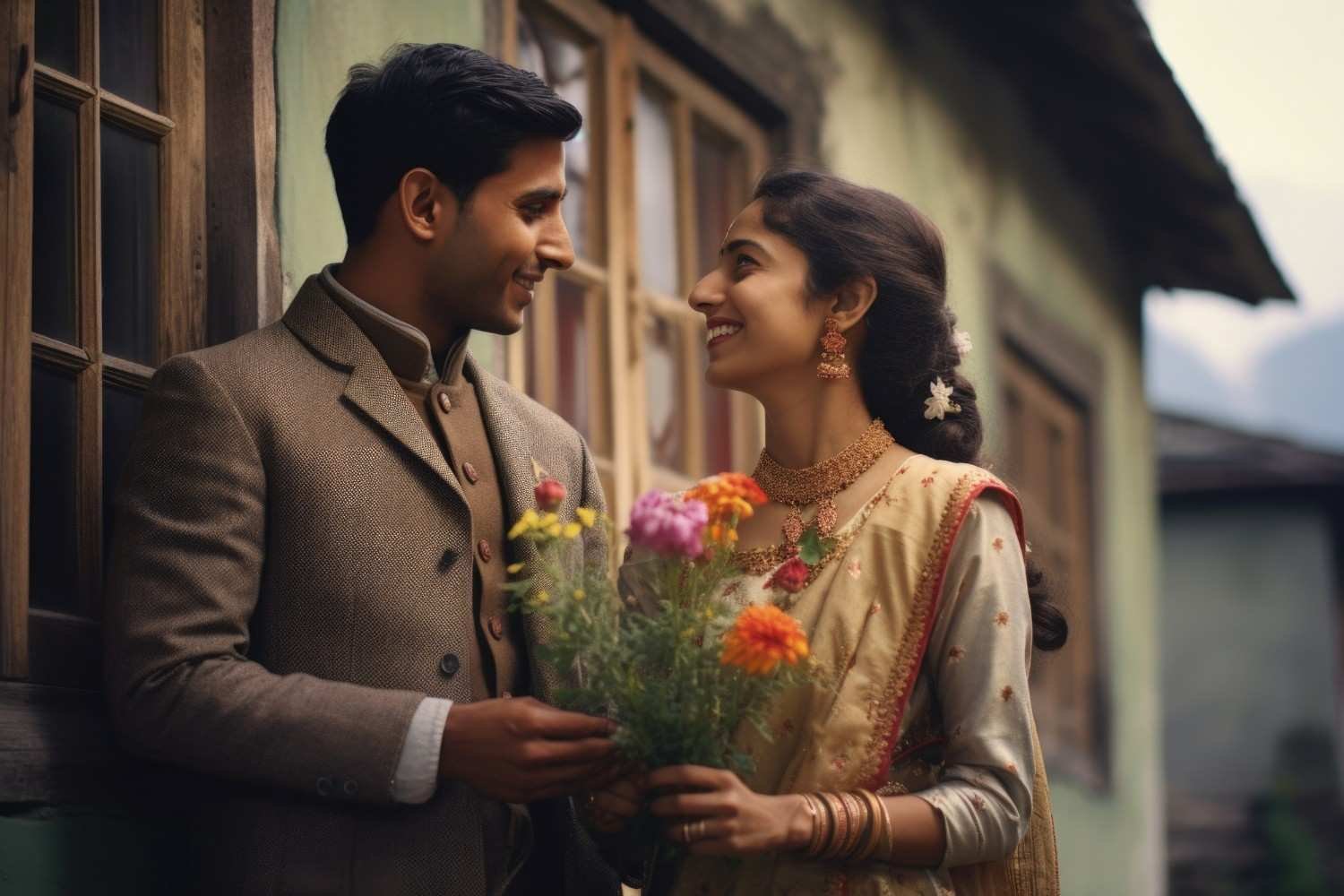

Every Knanaya Catholic wedding in Kerala carries within it a quiet but unmistakable continuity — a line that runs back, generation after generation, to the families who first settled the Malabar coast in the fourth century. knanaya matrimony is not simply a denomination-specific wedding ceremony. It is the mechanism through which an entire heritage continues to exist.
Heritage Carried Through Generations
The Knanaya Catholic community’s understanding of marriage is inseparable from its understanding of heritage. To marry within the Knanaya community is to actively participate in preserving a lineage that has remained remarkably continuous for over sixteen hundred years — a continuity few Christian communities anywhere in the world can claim.
This is not pride for its own sake. Families describe it, more often, as a form of gratitude — a recognition that something precious was entrusted to them by their ancestors, and that their own marriage choices either continue or interrupt that inheritance. The seriousness with which Knanaya families approach the alliance search reflects this deeper conviction.
How Families Approach the Knanaya Alliance Search
A knanaya catholic alliance search typically begins within the extended family network — grandparents, parents, and trusted community elders pooling their collective knowledge of Knanaya families across Kerala and, increasingly, across the diaspora. This network functions almost like a living archive, with family connections, reputations, and heritage lines tracked with remarkable precision across generations.
Background verification in this process carries an additional layer compared to other Kerala Christian communities: confirming genuine Knanaya heritage alongside the standard considerations of character, family reputation, and faith practice. This verification is taken seriously, not as suspicion but as due diligence appropriate to a tradition the community is committed to preserving accurately.
A Story from Pala
George’s family in Pala had been quietly conducting the alliance search for his sister, Annu, for nearly two years when a connection finally emerged through a cousin’s wedding in Kottayam. The family in question — from Chingavanam — had a daughter, Mariam, whose grandmother turned out to have grown up two villages from George’s own grandmother.
What might have been a simple coincidence became, in the Knanaya context, a meaningful confirmation. Both grandmothers, meeting for the first time at the *pennu kanal*, spent nearly the entire visit reconstructing shared family connections from decades earlier — names, marriages, and relationships that wove the two families together in ways neither had fully appreciated before that afternoon.
Annu and the prospective groom, watching their grandmothers from across the room, exchanged a look that George later described as “already knowing.” The engagement was confirmed within the month, with both families delighted not only by the personal match but by the heritage connection it represented.
Knanaya Catholic Wedding Customs: Heritage Made Visible
Knanaya catholic wedding customs kerala bring the community’s heritage consciousness into vivid, ceremonial form. The *Pattom* ceremony, conducted before the wedding, formally affirms the couple’s Knanaya identity and their commitment to carrying that identity into the family they are founding — a ritual unique to this community and central to its understanding of marriage.
The nuptial Mass follows the Syro-Malabar liturgical rite, with the *manga thali* tying and crowning ceremony shared broadly across Kerala’s Syrian Christian heritage communities. What distinguishes the Knanaya wedding specifically is the surrounding cultural context — the genealogical conversations, the heritage affirmations, and the community-wide significance attached to each new Knanaya marriage as a continuation of a centuries-old story.
Sustaining the Tradition in a Dispersed Community
As Knanaya families increasingly settle outside their traditional Kottayam heartland — in Indian cities, the Gulf, the UK, and North America — sustaining the community’s endogamy tradition requires intentional effort that earlier generations, living in close geographic proximity, did not need. Diocesan associations, diaspora community organisations, and matrimonial platforms with verified Knanaya-specific search functionality have all become important tools in this effort.
The community’s commitment to its heritage, however, has shown remarkable resilience across this geographic dispersal — families continue to prioritise Knanaya alliance search even when it requires considerably more effort than it would have a generation or two ago, when most Knanaya families lived within a relatively small radius of each other.
Frequently Asked Questions
Q: What makes Knanaya Catholic marriage distinct within Kerala’s broader Christian tradition?
A: Knanaya Catholic marriage is distinct primarily through its endogamy tradition — marrying within the Knanaya community — which the community understands as essential to preserving its sixteen-century heritage as descendants of fourth-century East Syrian Christian settlers. This heritage consciousness shapes the entire alliance search process, including additional background verification of Knanaya lineage.
Q: What happens during a Knanaya Catholic alliance search?
A: The search typically begins within extended family and community networks, with grandparents and elders contributing genealogical knowledge. Background verification confirms both standard considerations (character, family reputation, faith practice) and genuine Knanaya heritage. This is followed by the formal *pennu kanal* family meeting and, if both families agree, engagement and the *Pattom* heritage ceremony before the wedding.
Q: What is the Pattom ceremony in Knanaya Catholic wedding customs?
A: The *Pattom* ceremony is a ritual unique to the Knanaya Catholic community, conducted before the wedding Mass, formally affirming the couple’s Knanaya heritage and their commitment to carrying that identity forward into their new family. It reflects the community’s understanding of marriage as both a personal Sacrament and an act of communal heritage preservation.
Q: How do diaspora Knanaya Catholic families maintain their alliance search tradition?
A: Diaspora families rely on diocesan and community associations in their host countries, ongoing family connections back to Kerala, and increasingly, online matrimonial platforms with Knanaya-specific verification. Despite the added logistical effort, most diaspora Knanaya families continue to prioritise alliance search within the community as a matter of heritage commitment.
Q: Is genealogical connection between families common in Knanaya marriages?
A: It is relatively common, given the community’s historically tight-knit geographic concentration in Kottayam district and its long tradition of endogamy. Many Knanaya families discover distant genealogical connections during the alliance search process, which is often experienced as a meaningful confirmation of the match rather than a coincidence to dismiss.
The Knanaya Catholic community has carried its heritage across sixteen centuries through a remarkably consistent mechanism: the deliberate choice, generation after generation, to marry within a lineage its members believe is worth preserving. Every Knanaya wedding — however ordinary it might look from the outside — is, from within the community’s own understanding, a quiet act of extraordinary historical faithfulness.
KnanayaCatholicMarriage #KnanayaWeddingCustoms #KnanayaAllianceSearch #KottayamHeritage