
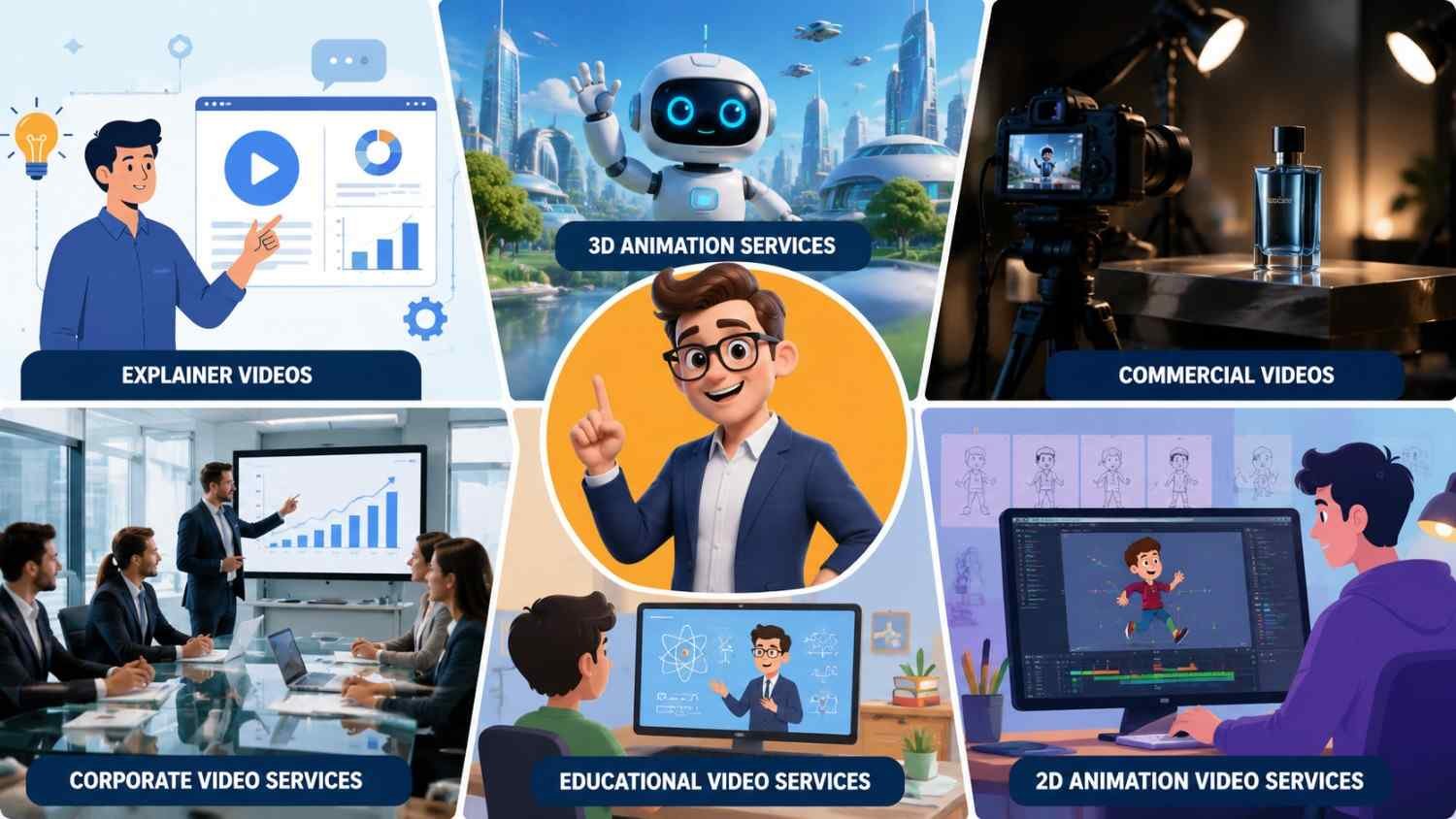

The way students learn is changing fast, and at the center of this shift is video. From primary schools to professional training, animated educational videos are now one of the most effective ways to explain complex ideas in a simple, visual format.
As education moves further into blended and online models, these videos are no longer just add-ons or extras. They are becoming core learning assets for schools, universities and edtech platforms that want to keep learners engaged on any device.
A growing role for video in education
Over the last few years, more classrooms and training programs have started to rely on video content as a regular part of the learning journey. Teachers use short explainer clips to introduce new topics, recap difficult chapters and give students material they can revisit at their own pace.
This same approach has moved into professional and corporate learning. Teams use video-based modules to train staff, standardize onboarding and roll out new processes without pulling everyone into long, in-person sessions.
Why educational videos work
Educational videos combine visuals, narration, graphics and text in one place, which makes it easier for learners to follow along and remember key points. Instead of just hearing or reading information, they can see it being demonstrated or broken down step by step.
Short, focused videos are especially effective. When each clip covers a single idea in a few minutes, learners are more likely to watch it fully, stay interested and come back to it when they need a quick refresher.
The unique impact of animation
Animation adds another layer of clarity to educational content. With characters, icons, motion graphics and simple visual metaphors, animated videos can turn abstract or technical topics into clear, story-like explanations.
This is particularly useful for subjects like science, technology, math and vocational skills, where traditional text or slides can easily feel dense. Animated sequences can slow down a concept, highlight the most important parts and show how everything fits together in a way that feels natural and easy to follow.
What makes an educational video effective
Not every educational video automatically leads to better learning. The best results usually come from content that is designed specifically for teaching, not just for looking impressive.
Three elements matter a lot:
The visuals are clean and focused
The visuals are clean and focused, without too many distractions on the screen.
The narration uses clear, conversational language
The narration uses clear, conversational language and keeps a steady, friendly tone.
The video is part of a larger learning flow
The video is part of a larger learning flow, with questions, assignments or discussions that push the learner to apply what they just watched.
When these pieces work together, a video feels less like passive content and more like an active learning tool.
Real use cases in classrooms and companies
In schools and colleges, animated educational videos help teachers reach different learning styles in the same classroom. Visual learners benefit from diagrams and motion, while others gain from hearing explanations alongside the visuals.
In companies, short animated modules are used for compliance training, safety instructions, software walk-throughs and skill-building programs. They allow employees to learn in small bursts, fit training into their schedules and replay any section whenever needed.
Why specialized studios matter
Because expectations are rising, many institutions and businesses now work with specialist studios that focus on educational animation. These teams combine scriptwriting, instructional design and visual storytelling to produce videos that are not only attractive but also aligned with clear learning outcomes.
Studios like Aadhya Animatics, for example, offer dedicated educational video services that are tailored to different age groups, subjects and delivery platforms. Instead of producing generic animations, they help clients plan the concept, script, storyboard, voiceover and final style so that each video fits smoothly into a curriculum or training program.
The future of learning with video
Learners today expect content that is clear, visual and available on demand. Educators and organizations that meet these expectations with well-planned animated educational videos are more likely to hold attention, improve understanding and support better long-term outcomes.
As more learning moves online and hybrid, animated educational videos are set to become a standard part of how schools, universities and companies teach, train and communicate. For many institutions, the question is no longer whether to use educational video at all, but how quickly they can build a strong, scalable library of it.